















The All-Natural Interactive Internet TV Show

New Placebo Research

Placebo: Control or Just More Bad Science?

Placebo, part of the triumvarate of the "gold standard" used in clinical trials , the randomized, double blind, placebo controlled study, is really far from the "inert" substance that it has been hyped to be. Truth be known, placebo is not inert, not constant and is an extremely poor control.

The notion that placebo control provides clear insight into what another treatment can provide is nonsense. In fact, placebo is really just a convenient catch phrase for everything that might disturb outcomes of clinical trials and call into question the results.

Let's look at placebo as it is involved in this reseach and the various false assumptions upon which this "house of cards" is built.

What is the "Placebo Effect?"


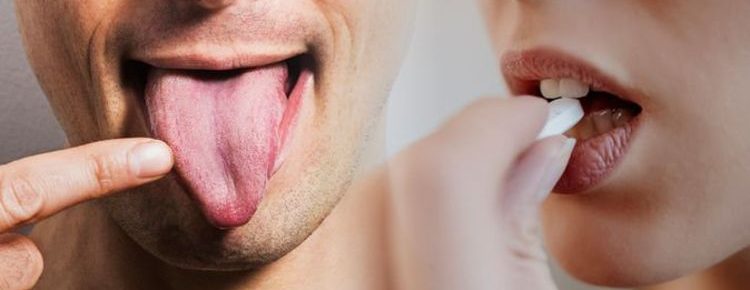
The placebo effect is what happens when an inactive substance (like a sugar pill) or treatment is used to determine the effects of suggestion on the psychology, physiology, or biochemistry of experimental participants. It is difficult to define and a large segment of the population experiences it.

The report that is the basis for the use of placebo in today's clinical trials was "The Powerful Placebo", by H.K Beecher. It was first published in the Journal of the American Medical Association in 1955. This article has been misquoted and used inappropriately ever since.

This report was re-analysed in 1997 in an article (in Clinical Epidemiology authored by Kienle GS, Kiene H.) and "no evidence was found of any placebo effect in any of the studies" used by Beecher. The claimed "effects" were produced by lots of different factors except the placebo effect.

Placebo Is Far From "Rigorous Science"


The notion of placebo as it appears in modern clinical discussions is not a rigorous concept, and despite many attempts, it has not been possible to provide a real consistent definition.

First of all, in most cited articles on the effects of placebo it is defined as "non-specific" therapeutic effects, this is hardly a clear definition. In addition, most of the definitions used state that placebos are inert and that they produce the placebo effect. Well, any grade school student can tell you that doesn't make sense. It can't do nothing and do something at the same time.

Placebo is actually a pseudo-concept. And as the basis of our current standard of analysis of how well treatments work is extremely flawed. It clearly does produce a response and that response varies tremendously from person to person and study to study. In fact, some researchers now believe that the placebo effect is actually a conditioned response, much like the Pavlovian response of salivating when a bell is rung or when profits for pharmaceutical drugs are announced.

Recent Research Demonstrates the Influence of Placebo on Outcomes


Recent studies published in Proceedings of the National Academy of Sciences using advances in neuroscience (PET scans) have shown that placebos can reduce pain in humans. Researchers at Columbia and Michigan University have shown that the brains of volunteers who believed that what they were taking was pain medication were shown to be spontaneously releasing opioids, or natural pain relief. Again demonstrating its actual effects.

According to an ABC News report the Food and Drug Administration (FDA) contends that as many as 75 percent of patients have had responses to sugar pills. It pointed out that all major clinical trials use placebo groups because the effect is significant and to be expected.

This effect has been known for years. Generally, one third of a control group taking a placebo shows improvement and Harvard's Herbert Benson says that the placebo effect yields beneficial clinical results in 60-90% of diseases, including: angina pectoris, bronchial asthma, herpes simplex, and duodenal ulcers.

As mentioned above, recent theories also suggest that the placebo effect may be conditioned and research in this area has demonstrated that placebo effect was more powerful after patients were introduced to an actual drug. A study involving (Suchman and Ader 1992) the use of a hypertensive drug (atenolol) and a placebo demonstrated that the placebo effect produced a significantly higher anti-hypertensive response than no treatment in both morning and evening blood pressure readings. In addition, the placebo response was more than the residual drug effect, which was consistent with a conditioning model and reflected the acquisition of a conditioned response.

The implications of this research on medical research is staggering. If the findings of studies like this are true, it tells us that outcomes from drug crossover trials are essentially flawed, and conditioned effects are produced as the result of prior drug exposure. Prior exposure will then become a variable that causes problems in the research design. (Don't expect this line of research to be funded anytime soon.)

The Fundamental Problem With Placebo


Ever since Beecher's 1955 study appeared, it has been claimed that about one third of the therapeutic effect observed in a typical trial is attributable to the placebo effect. However, this is not what Beecher showed at all.

In the "meta-analytic" section of his paper he gave the proportion of subjects across 15 trials deemed to have "been satisfactorily relieved by placebo" as 35.2% +/- 2.2%. This, if anything, is an estimate of the frequency of placebo-responders' in the total trial group, but says nothing about the real influence of the effect.

Beecher determined that the idea that the placebo effects were roughly constant at around 35%, and that the term could be usefully applied to all those variables otherwise called "non-specific" contributors to therapeutic outcomes - the natural (and unknowable) course of diseases, regression to the average, the effects of expectation , changes in effect and other unquantifiable psycho-somatic features of illness, beliefs and communication by the therapist, etc.

If anything is clear from subsequent studies, it is that the placebo effect is not constant, but rather, quite variable. Placebo response rates all the way from zero to 100% have been reported in virtually every clinical condition studied (the variation in Beecher's own series was 15-58%). The so-called effect appears to be both universal and completely unpredictable.

A Convenient Place to Hide


Beecher, who was interested in promoting the use of Randomised Controlled Trials (RCTs) in clinical research, made an assumption which is almost certainly false - that placebo effects in the intervention and control arms of a trial will be identical, or nearly so, and independent of the therapeutic effects. In the rationalization of RCTs which followed, this claim has never been scientifically proven, and in specific instances, can be easily proved wrong.

Furthermore, Ted Kaptchuk has shown that both the concept and the name of placebo were transferred from at least 200 years of use in clinical practice, in the decade following the second world war, to a new role required by those who were promoting the new discipline of 'clinical research'.

During this post-war period, placebo became the answer for all the confusing factors that disturb therapeutic assessments. It has become a refuge for researchers, a place to hide, because actual research results would be contaminated without rigorous procedures for its exclusion. Its modern use is ,therefore, quite recent, and closely related to the adoption of the RCT as the methodological "gold standard" for trials of therapy.

"Inertness" of Placebo


Although placebos are generally said to be pharmacologically inert substances or formulations, sham treatments, or inactive procedures, they are only inert, sham, ineffective, or inactive in the particular sense that they have no known cause and effect relationship with any of the drugs or interventions that they are applied to. Again any grade school science student can tell you that the fact that you don't know or understand something does not make it inert.

Placebos are deemed inactive or ineffective treatments or formulations; however a patient may experience either a positive or negative clinical effect while taking one. When a placebo is given to mimic a previously administered drug, it may also incur the same side effects as the prior authentic drug. Most of these effects are thought to be psychological in nature or due to other unrelated factors.

In addition, not all placebos are equally effective. A placebo that involves ingestion, injection, or incision is often more powerful than a non-invasive technique. Placebos administered by authority figures such as general practitioners and other experts may also be more powerful than when this psychological authority effect is absent.

They are, however, not inert, sham, or inactive in any other manner of speaking; and they may well, in and of themselves, generate considerable change within any given subject, at any given time, under any given circumstances.

Bottom Line


Clinical researchers have no more idea of what is really going on in the control arms of their trials than Hippocrates did 2,500 years ago. This is yet another example of how the public is conned by fake science. Studies which rely on placebo control are not good science and are not worth the paper they are printed on. Only when this fact is faced and study designs are corrected to account for this tremendous variability can we have anything approaching good results. In the meantime, question authority, people, and don't blindly trust the results of "clinical research".


This product was added to our catalog on Thursday 29 May, 2008.

Copyright © 2010 Green Health Live. Powered by Zen Cart
The information contained on this website is not intended to cure or treat any medical conditions, nor is it a substitute for care from a medical professional.